"Shukebeta" has become the trademark of pet rat food "fairy tale king" Zheng Yuanjie is busy defending rights.

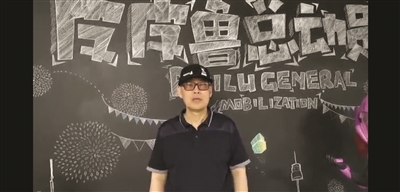
Zheng Yuanjie
Recently, Zheng Yuanjie, the "King of Fairy Tales", published a long article in Weibo, which mentioned the story of maintaining intellectual property rights in Nanjing. In an interview with the Yangzi Evening News reporter, Zheng Yuanjie also shared his many years’ experience and experience in safeguarding rights.
"Shunk Beta" became a brand of pet feed.
Zheng Yuanjie, 64, has lost a lot of weight and her blood pressure is normal. The monthly magazine The King of Fairy Tales, which he has been writing for 34 years, has sold more than 200 million copies. The stories of Cpaing, Lu Xixi and Shuke and Beita have now begun to influence the fifth generation of young readers.
Now, apart from writing every day, a large part of his energy is devoted to protecting intellectual property rights, which has become a part of his life. "The infringement of trademarks and trade names on me is very serious, so serious that more than 1,000 people have been registered maliciously. It takes at least three years for each rights protection to succeed. No writer has faced such a large-scale book piracy like me, especially trademarks and trade names. "
"I found this infringement very accidental. Some readers complained to me that the quality of Shukebeta brand rat food bought by hamsters at home is not very good. " Zheng Yuanjie told reporters that he has been defending his rights for a year and has not solved it. "In fact, a business like this can come to me for cooperation, and I have to authorize it."
The reporter logged into official website, Jiangsu Collaborative Pharmaceutical Bioengineering Co., Ltd., and saw that "Shukebeta experimental animal feed, rat feed and SPF transgenic mouse food" and other products are still on sale.
On June 15th, 2018, Zheng Yuanjie submitted to the State Trademark Review and Adjudication Board an application for invalidation of the "Shukebeta" trademark maliciously registered by Jiangsu Collaborative Pharmaceutical Bioengineering Co., Ltd.. According to the legal time procedure, the State Trademark Review and Adjudication Board will make a matter of justice on the application for invalidation of the "Shukebeta" trademark submitted by Zheng Yuanjie recently.
Zheng Yuanjie also found that "Jiangsu Collaborative Pharmaceutical Bioengineering Co., Ltd." not only infringed its intellectual property rights in the trademark field, but also maliciously registered "Nanjing Shukebeta Pet Products Co., Ltd." on November 18, 2015, and the trade name (enterprise name) also infringed his intellectual property rights.
On July 17th, 2018, Zheng Yuanjie reported the trademark infringement of "Nanjing Shukebeta Pet Products Co., Ltd." to Nanjing Municipal Market Supervision Administration and Jiangsu Provincial Market Supervision Administration.
Defending rights for 30 years, reciting the Trademark Law.
Zheng Yuanjie said that he is also a serious person in his life. In the 42-year writing career, I have been struggling for rights protection for 30 years, and there are many dramatic rights protection stories. "In the 1980s, a publishing house in Hunan published Fairy Tales of the Zheng Yuanjie Zodiac. At that time, my fans in the printing house came to tell me that in order to conceal royalties, the printing quantity was wrong. After the negotiation, the other party had to return it. "
The struggle against piracy began in 1986, and in recent years, we have encountered "new opponents" in view of trademark and trade name problems arising from infringement. His characters "Cpaing" and "Lu Xixi" have become popular candidates for registered trademarks. On February 28th, 2018, Zheng Yuanjie spent 14 years defending his rights until the National Trademark Review and Adjudication Board declared the trademark of Pipiru, which was registered maliciously by "Zhengzhou Pipiru Western Restaurant", invalid.
Last year, a company in Beijing used the homonym "Luxixi" trademark to sell cooked food such as chicken legs next to "Lu Xixi", and its trademark was revoked, causing concern. This is the first trademark that was declared invalid because of homophonic among the five trademarks of fairy tale characters written by Zheng Yuanjie.
The discovery of infringement also made Zheng Yuanjie laugh and cry. One day in 2016, Zheng Yuanjie was stopped by a saleswoman in a supermarket in Beijing. She said to Zheng Yuanjie with a toothpick and a paper plate filled with food: "Sir, please taste the bittern (Luxi)." Seeing that I shook my head, she added, "You don’t like the sausage? I’ll change your collarbone? "
Zheng Yuanjie told reporters that he was forced to be an "expert" by rights protection. "I can recite the Trademark Law of People’s Republic of China (PRC) by heart. As a writer, shouldn’t you recite the Song of Eternal Sorrow? "
Zheng Yuanjie often made statements in court as a third person, and he also compiled these statements and published them as Zheng Yuanjie Court Statements. "It is effective to protect intellectual property rights from dolls. I hope that by popularizing the People’s Republic of China (PRC) Trademark Law to children in China, children will grow up to be a generation that despises plagiarism and advocates innovation. "
He once helped Jiangsu public security to solve a major piracy case of 10 million levels.
Zheng Yuanjie said that he generally has two ways to report, one is to report to the e-commerce platform that sells the book, and the other is to report to the national office of "eliminating pornography and illegal publications".
What surprised him most was that an ordinary report did not expect to lead to a major case. In February, 2019, Zheng Yuanjie reported that two companies in Beijing sold pirated books of "The Story of Pipiru" through online transactions and logistics delivery, which infringed their copyrights.
In August this year, the case of pirated books was solved. The police in Huai ‘an, Jiangsu Province arrested 14 suspects and found out that more than 1 million pirated books were produced and sold, involving more than 10 million yuan, and 21 publishers were infringed.
The relevant person in charge of the "anti-pornography and illegal publications" office in Jiangsu Province introduced that the modus operandi of the case was hidden, and genuine pirated books were mixed and sold, which was difficult to identify. Pirated booksellers also put fake anti-counterfeiting labels on them, which are indistinguishable to the naked eye, and also found manufacturers who make anti-counterfeiting labels to identify them with professional equipment.
How did Zheng Yuanjie discover the clue of this major piracy case? He told reporters, "My books are generally 4-5 fold when they are approved, plus labor costs, postage, etc., it is impossible to sell them at a discount of less than 50%. I found that an online shop sold my books at a 50% discount, so I bought a few books and found them pirated after I came back for identification. "
Zheng Yuanjie said with a smile, "I used to stay at the scene to fight against pirated books. Now, with this method, I can fight piracy at a very low cost without leaving home." After 30 years of cracking down on piracy, what Zheng Yuanjie feels most is that the cost for writers to crack down on piracy is getting lower and lower, and it is getting easier and easier to safeguard intellectual property rights. (Yangzi Evening News reporter Zhang Nan)