World No Tobacco Day | Investigation Notes: Taking Shandong and Shanghai as examples, where has China’s tobacco control legislation gone?
CCTV News:According to the statistics of the World Health Organization, tobacco hazards have killed more than 8 million people around the world, of which about 1.3 million are non-smokers exposed to second-hand smoke. Smoking can not only cause lung diseases, but also be related to more than 20 different subtypes of cancer, including esophageal cancer, gastric cancer, rectal cancer, colorectal cancer, liver cancer and so on. Many studies have shown that smoking is also strongly related to cardiovascular and cerebrovascular diseases.
China is one of the founding members of the World Health Organization. On May 21st, 2003, the World Health Assembly approved the WHO Framework Convention on Tobacco Control, and on November 10th of the same year, China officially signed the Convention. On August 28th, 2005, the NPC Standing Committee decided to ratify the WHO Framework Convention on Tobacco Control (hereinafter referred to as the Convention).
According to the first guiding principle of the Convention, each contracting party should make everyone aware of the health consequences, addiction and fatal threats caused by tobacco consumption and exposure to tobacco smoke, and should consider effective legislative, enforcement, administrative or other measures at the appropriate government level to protect everyone from exposure to tobacco smoke. It is clearly stated in the measures to reduce tobacco demand in Part III of the Convention to prevent exposure to tobacco smoke in indoor workplaces, public transport, indoor public places and, where appropriate, other public places.
In 2016, the "Healthy China 2030" Planning Outline issued by the Central Committee of the Communist Party of China and the State Council proposed that by 2030, the smoking rate of people over 15 years old would be reduced to 20%. In 2019, the Healthy China Action (2019— In 2030), it is also proposed in the goal of tobacco control action that by 2030, the proportion of people protected by comprehensive smoke-free laws will reach 80% and above. In 2023, 44 cities in China have newly introduced or revised municipal tobacco control regulations.
The real-time visual map of the smoke-free legislation process in China provinces produced by the Health Law Research Center of China University of Political Science and Law shows that the current population protected by comprehensive smoke-free legislation is 224 million, accounting for 15.9% of the total population. If we accept the proportion of 300 million people who choose to smoke in China, there are still 656 million non-smokers who fail to get legal protection from tobacco smoke. Since the Convention was adopted in China for 19 years, how feasible is tobacco control legislation? Recently, the reporter followed Peking University Social Media Research Center into Shandong and Shanghai, and conducted field research to discuss the current work practice of tobacco control legislation.
one
The reporter learned during the investigation in Shandong that up to now, according to the legislative plan of the Shandong provincial government in 2021, the provincial tobacco control regulations have been incorporated into three types of legislative plans (local regulations that should be investigated and drafted quickly). After research by relevant parties, it is planned to incorporate the relevant provisions on tobacco control into the revised Regulations on Patriotic Health in Shandong Province in order to meet the relevant requirements of the Healthy China Action. The revision of the Regulations on Patriotic Health in Shandong Province has been included in the three types of legislative plans of Shandong Provincial People’s Congress in 2022 and 2023.
At the municipal level, since Qingdao formulated and promulgated the Regulations on the Control of Smoking in Qingdao in 2013, Weifang City and Weihai City also introduced smoking control management measures in early 2023. The "Regulations on Controlling Smoking in Public Places in Jinan (Draft)" is in the legislative process, which was reviewed by the Jinan Municipal People’s Congress in the first round in 2022, and the second round has not yet started.

The municipal legislative plan of Shandong Province includes the prohibition of smoking in public places (revised)
At present, Zibo, Dezhou and Binzhou in Shandong Province have included tobacco control in the second-class legislative plan of the municipal people’s congress, and Rizhao has included it in the third-class legislative plan of the municipal people’s congress. Regarding when the local government can turn the legislative plan into legislation and overcome the obstacles that may exist in the process of tobacco control legislation, Li Min, director of the Institute of Health Education of Dezhou CDC, said at the symposium on tobacco control, referring to the past experience of Qingdao and Shanghai, if there is an opportunity to host large-scale events or activities, tobacco control may become one of the important prerequisites for the selection of the host venue. At present, during the two sessions every year, Dezhou City also proposes suggestions on behalf of the Committee members to support the municipal tobacco control legislation, so as to increase the possibility of tobacco control legislation. In addition, the further revision of the patriotic health regulations on tobacco control is also one of the directions that Dezhou is working hard.
At present, at the provincial level, Shandong has been actively communicating legislative plans with the Justice Department and the Legislative Committee of the National People’s Congress, and tobacco control indicators are also being included in the assessment of health cities. How can we smoothly promote tobacco control legislation at the provincial level? Wang Liansen, director of the Health Education Institute of Shandong Provincial Center for Disease Control and Prevention, said that on the one hand, whether the tobacco control implementation can introduce specific requirements at a higher level, and on the other hand, whether the tobacco control work can occupy a greater weight in the work objectives of creating health and creating a civilized city. The practical feedback from the masses on smoke-free environment and health demands will also become an invisible thrust for tobacco control legislation.
Hou Jiaxiang, chief physician of Shandong Provincial Center for Disease Control and Prevention, also stressed that tobacco control is not just a health issue. Studies have shown that tobacco will also have an impact on the environment, oceans, land, etc., and relevant responsible departments need to work together to pay attention to ecological issues such as land health and marine environment.
Although the current tobacco control legislation in Dezhou is still in the promotion stage, Li Min believes that the preliminary work related to tobacco control is very necessary for long-term legislative planning, and it is an important link to insist on monitoring the tobacco control-related data to provide basic data. If legislation can be successfully enacted in the future, then after the legislation, there will be a number of evaluation indicators to illustrate the significance of this legislative work, including the public opinion survey on tobacco control, the current smoking rate survey and the current situation of tobacco control in public places. If there is no preliminary work to accumulate basic data, it is difficult to evaluate the role of laws and regulations in people’s health and environmental development in this city.
2
Adhering to this initial intention, in addition to continuing to promote the legislative work, the whole Shandong Province has also widely mobilized all units at all levels and the general public in the province to actively implement the tobacco control contract through measures such as tobacco control science popularization, smoking cessation service and pilot innovation, so as to reduce the harm of second-hand smoke and let more people have a healthy and clean environment. Up to now, the smoking rate of people aged 15 and above in Shandong Province has dropped from 22.65% in 2020 to 21.39% in 2023. It can be seen that as long as we unswervingly continue to promote the implementation of tobacco control, it is expected that the smoking rate will continue to decline to the goal set by a healthy China in the next few years.
At present, Shandong has maintained three 100% full coverage achievements of smoke-free party and government organs, smoke-free schools and smoke-free medical and health institutions in the province. In 2022, Shandong Province issued the Notice on Further Strengthening the Standardized Construction of Quitting Outpatients in the Province, requiring the standardized implementation of five systems (brief intervention smoking cessation system, follow-up inquiry system, referral system, outpatient registration system and regular follow-up system), and requiring the standardized distribution of smoking cessation health education prescriptions. At present, there are 694 smoking cessation clinics in Shandong province.
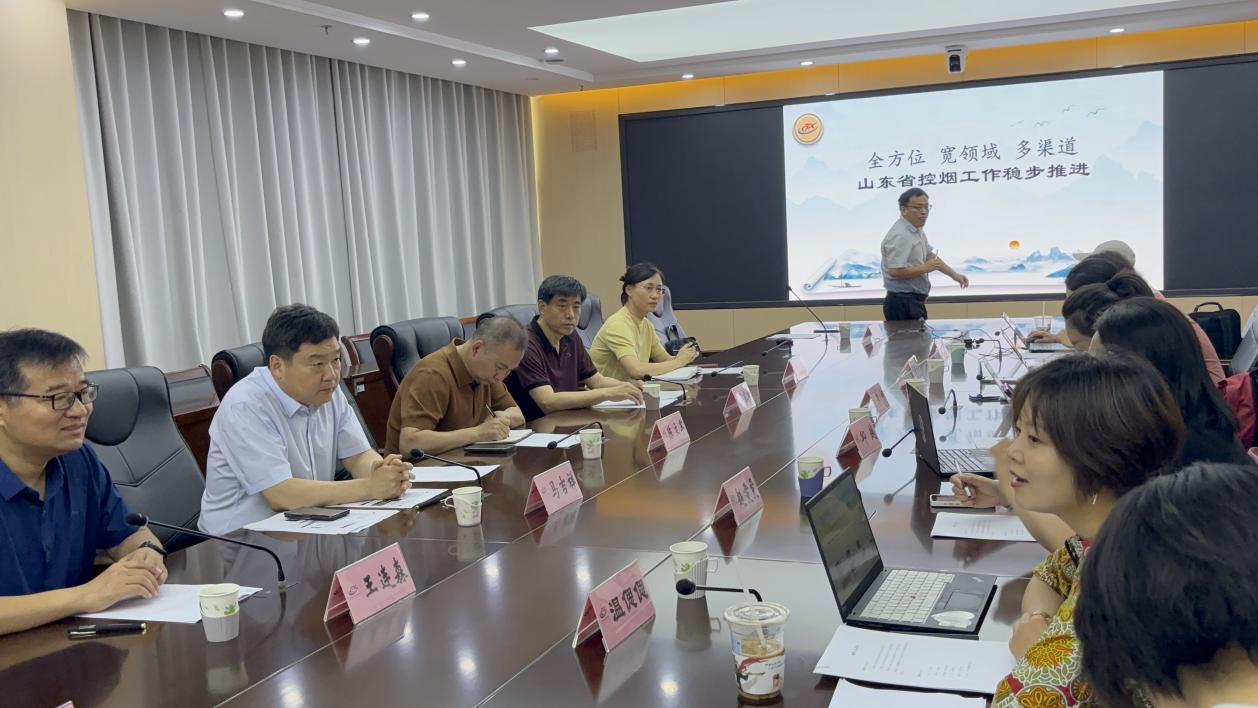
Media forum to share the progress and practice of tobacco control legislation in Shandong Province.
Ma Jixiang, director of the Shandong Provincial Center for Disease Control and Prevention, said that the current tobacco control work in Shandong Province is not "once and for all". On the basis of the policies already issued, it is necessary to establish supporting mechanisms through key technical strategies, including some more objective evaluation indicators and tools. For example, the smoke alarm is used to capture the "instantaneous" smoking behavior, and a new physical examination index "cotinine" is set to screen smokers in smoke-free units, thus truly creating a zero-smoke environment for non-smokers. At the same time, he also stressed that smokers should be fully respected in the setting of outdoor smoking places, and smokers should be given standardized smoking space to achieve two-way respect.
Ma Jixiang believes that the next goal after the establishment of the smoking cessation clinic is to realize the integration of medicine and prevention in the field of tobacco control. It is no longer just to set up a special clinic, but to implement this lifestyle intervention in the work of every clinician. In the work of tobacco control, as a clinician, we should not only prescribe drugs, but also prescribe health. The first health prescription is to quit smoking. Clinicians should really ask patients whether they smoke or not, and tell TA to quit smoking by writing prescriptions on medical records, so that patients will often pay attention to it.
At the same time, this is also in line with the connotation of the "prevention and control tube" of the medical community. If the risk factors are really intervened, the future treatment costs will be reduced, and the emergence of major diseases may be postponed later, thus achieving a more efficient use of medical insurance funds. According to the research and observation of Hou Jiaxiang, the chief physician, the people he came into contact with who had quit smoking showed very complicated withdrawal situation and results. Therefore, tobacco control intervention, as a psychological behavioral intervention, needs further research on health behavior, so as to better guide doctors to do a good job of behavioral intervention for smokers.
three
According to Xinhua News Agency, Wu Xiangtian, deputy director of the Department of Planning, Development and Information Technology of the National Health and Wellness Commission, said at the recent inaugural meeting of the Professional Committee on Tobacco Control and Health Promotion of chinese association on tobacco control Medical Institutions and the academic seminar on "Tobacco Control and Health" that it is necessary to continuously promote the construction of a smoke-free environment, and take tobacco control education as one of the important contents of treating patients to help them realize a healthy lifestyle. At the same time, increase scientific research on epidemiology and clinical diagnosis and treatment of tobacco-dependent diseases, and further promote tobacco control.
In recent years, some places have actively promoted tobacco control legislation. For example, since the implementation of the Regulations on the Control of Smoking in Public Places in Shanghai, the adult smoking rate has dropped to 19.4%. The Regulations on the Control of Smoking in Beijing stipulates that smoking is prohibited in public places, indoor environment of workplaces, outdoor queues and other occasions; The Regulations on the Control of Smoking in Shenzhen Special Economic Zone stipulates that smoking is prohibited in indoor workplaces, indoor public places, public transport and outdoor places such as schools, parks and medical and health institutions … …
Shanghai is one of the earliest cities in China to carry out tobacco control. On December 10th, 2009, the Standing Committee of the Municipal People’s Congress passed the Regulations of Shanghai Municipality on Controlling Smoking in Public Places (hereinafter referred to as the Regulations), which came into effect on March 1st, 2010. The Regulations are the first local regulations on tobacco control promulgated by the provincial people’s congress in mainland China after the entry into force of the WHO Framework Convention on Tobacco Control in China. From May 1st to October 31st, 2010, the 41st World Expo was held in Shanghai. The World Health Organization proposed to the government of China that the first "smoke-free Expo" should be held. At the same time, Shanghai started the "Smoke-free Shanghai" 1.0 era.
On November 11, 2016, the Shanghai Municipal People’s Congress voted and passed the Decision on Amending the Regulations on Smoking Control in Public Places in Shanghai, which came into effect on March 1, 2017, and stipulated that smoking was prohibited in indoor public places, indoor workplaces and public transport, achieving a comprehensive indoor smoking ban, and "smoke-free Shanghai" entered the 2.0 era. The Standing Committee of Shanghai Municipal People’s Congress passed the amendment to the Regulations on October 28, 2022, and it will take effect on October 28, 2022. Shanghai became the first city to amend the tobacco control regulations to include e-cigarettes in the smoking ban in public places after the e-cigarettes were regulated at the national level. At this time, "smoke-free Shanghai" entered the 3.0 era.
Li Min once said at the forum that in the discussion of tobacco control legislation in Dezhou, a key question is: If legislation is enacted, who will enforce the law against illegal smoking? The reporter came to Shanghai, which has implemented tobacco control regulations, to try to find a feasible way. Generally speaking, smoking is an instantaneous behavior, and the use of e-cigarettes will not produce cigarette butts. Once illegal smoking occurs, it will bring certain dissuasion or law enforcement difficulties. However, the staff of the Shanghai Health Promotion Center said that at present, the clues of local illegal smoking are mainly received through public reports, so the "co-governance and sharing" of smoke-free environment has weakened these barriers to a certain extent for the special law enforcement team.
Social co-governance emphasizes the participation of the government and multiple subjects (including group organizations, individual volunteers, citizens and the media). In the "Six Ones" model of tobacco control work in Shanghai, in addition to writing tobacco control work into several important systems, the social co-governance of tobacco control is also mainly reflected in the multi-sectoral cooperation and social co-governance mechanism in Shanghai, the 12345 tobacco control complaint hotline and the construction of tobacco control thermal map.
According to the requirements of tobacco control regulations, the Shanghai Health Promotion Committee coordinated the joint actions of tobacco control supervision departments, industry authorities and volunteer groups of various associations, and formed a social co-governance of tobacco control, and gradually formed two supporting systems. One is the quarterly supervision and law enforcement liaison system, which includes municipal horizontal supervision and law enforcement departments and industry management departments, as well as district-level related units. The other is the quarterly special law enforcement week action, which will have 1— In two weeks, according to the emerging problems during that period, the joint law enforcement in some places was focused and targeted.
In 2015, Shanghai included complaints about tobacco control in the answering range of the public hotline 12345, and in 2017, it included the public hotline in the national tobacco control supervision plan. Based on the clues of providing volunteers with first-line environmental inspections and considering the limitations of changing the hotline complaints, Shanghai then developed a thermal map of tobacco control to urge the rectification of places, as well as provide important clues for volunteers to inspect and supervise the illegal smoking, so as to realize the joint construction and sharing of healthy cities.
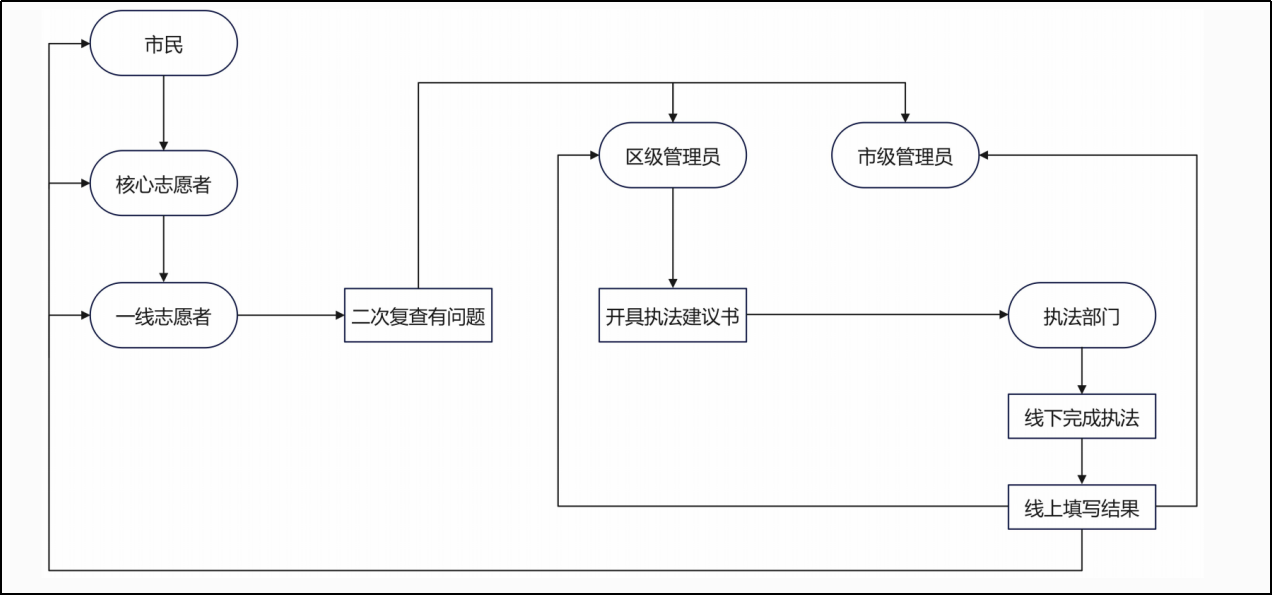
Tobacco control law enforcement process of Shanghai tobacco control thermal map
At present, the workflow of tobacco control in Shanghai can basically be completed on the thermal map applet: citizens arrive at the core volunteers after submitting illegal clues, and assign work orders to frontline volunteers according to their addresses. frontline volunteers are responsible for on-site inspection and secondary review. Review the problematic places will be submitted to the district administrator. The responsible comrades of tobacco control work in this area will issue law enforcement proposals to relevant law enforcement departments after confirming the places and problems. After the law enforcement department completes the law enforcement offline, it submits the results online and feeds them back to all the clients at the same time.
four
Up to now, 24 provinces in China have issued provincial-level tobacco control regulations, and 254 cities have issued municipal-level tobacco control regulations, and the proportion of people protected by comprehensive smoke-free regulations has been increasing. It is noteworthy that Shanghai has actively adopted the MPOWER measures proposed by the World Health Organization in the Convention to promote tobacco control compliance. Including the implementation of the advertising law, prohibiting the sponsorship and promotion of tobacco for minors, and at the same time clarifying that all regulatory departments will jointly enforce the law, and enterprises and units that have the above behaviors will be blacklisted in the credit system, and joint punishment will be implemented according to the law and regulations. There is also the regular monitoring of M (Monitor tobacco use and prevention policies) in the MPOWER of the Convention to grasp the tobacco use situation.

Standard outdoor smoking spots in Shanghai
The staff of the Office of the Shanghai Health Promotion Committee said that the achievements made in the implementation of tobacco control in Shanghai now mainly come from two aspects, on the one hand, the legalization of tobacco control, on the other hand, guidance and publicity are needed to create a smoke-free atmosphere for non-smokers.
According to the white paper on the monitoring of the Regulations in Shanghai in previous years, the proportion of people discouraging smoking and enforcing the law is increasing year by year, which shows that if better tools are provided for citizens to feedback clues, their enthusiasm for participating in social co-governance will be improved accordingly. Last year, the thermal map of tobacco control was included in the scope of investigation for the first time in Shanghai. The results showed that in 2023, only 14.7% of the intercepted people had heard of the thermal map applet, and 40.2% of them had used the applet. The staff of the Shanghai Health Promotion Center said that there is still much room for improvement in this data, and more publicity is needed to attract more citizens to join the tobacco control work of social co-governance.
In addition, during the investigation, the reporter learned that China’s tobacco control work is also constantly challenging the new challenges brought by emerging industries, the definition of places, and the secrecy of behavior (e-cigarettes). For example, in the newly opened "Cigar Bar", guests can buy cigars and have business talks with drinks. The direct use of cigars in this place is an illegal situation that has not been encountered in the past tobacco control law enforcement work, and it needs to be standardized and managed in time. For example, when the commercial housing is purchased, it includes the pool area. Does the corridor belong to a private place, and does smoking here violate the Regulations? Private cinemas and other places are also being defined in the legislation of public places. For another example, unlike traditional tobacco, e-cigarettes have no open flames and cigarette butts, which requires technical means such as smoke sensing and picture monitoring to assist in dissuasion or stagnation law enforcement.
Data show that the adult smoking rate in Shanghai has dropped by 7.5 percentage points to 19.4% since the legislation of self-control smoking, reaching the goal of "Healthy China 2030" ahead of schedule. The results of the 2021 national youth tobacco epidemic survey show that the utilization rate of cigarettes and e-cigarettes among middle school students in Shanghai is the lowest among 31 provinces in China. In 2021, the average life expectancy in Shanghai was 84.11 years, the highest among 31 provinces in China. (Reporter/Chen Shiwen Proofreading/Liang Yaqin)