Jin Mu Group: Showing Great Health Achievements of Traditional Chinese Medicine with Tourism Experience


Departure: the cultural memory of ignorant years
Thirty years ago, the cultural field in the mainland of China was in ruins. Thirty years later, the cultural development in China has been dazzling and missing.
Walking so fast, it’s easy to forget why you started in the first place. How many people have forgotten that they were moved by something and burst into tears. We tried to find the earliest bud that sprouted 30 years ago, hoping to find the bag that was left behind with the original dream …
Pop music Teresa Teng: a legend that comes quietly.
Her singing came from the other side of the strait and became the first gentle in that depressed political environment.
Our reporter/Yang Shi
Teresa Teng is an unavoidable name in the history of pop music in China. Thirty years ago, the cultural field in the mainland of China was in ruins. Her singing came from the other side of the Taiwan Strait, which became the first gentle song in that political environment. People privately played and recorded it, which quietly influenced more than one generation without any publicity.
The real Teresa Teng
"Teresa Teng has always known that she is very popular in the mainland. She is not unwilling to come to the mainland, but all kinds of coincidences have not come. The first half and the second half have their own reasons." Guan Weihua said while drinking red wine in his own bar in Beijing, "I have too many dribs and drabs with Teresa Teng."
Guan Weihua, a Singaporean, was Teresa Teng’s agent when he started his career, and later had a close relationship with the Deng family. Teresa Teng made two films in his life, Thank you, General Manager, in 1969 and Miss Fans the following year. Guan Weihua discovered Teresa Teng because of the previous film. In the 1960s and 1970s, he often took some artists to perform in Southeast Asia.
He found Teresa Teng’s mother to talk about the contract through friends. "My mother and Deng will talk about it in a minute. Teresa Teng was only a teenager at that time, and she had to pull me to teach her to swim. " Guan Weihua said that Deng Ma’s contract was $100 a day, which was a very high fee at that time. But after arriving in Vietnam, Guan MUGUR PETRU CIUBANCAN found that his monthly income reached $15,000. So he found Teresa Teng’s mother again and told the truth. He gave the money to Deng’s mother, let the other party bear his own expenses, and only got a commission of 10%. It was also that time that Guan Weihua won the trust of the Deng family, and they have been in contact since then.
Since then, Teresa Teng’s income can reach $10,000 a month. Before that, Teresa Teng’s life was not rich. She was born in Tianyang Village, Baozhong Township, Yunlin County, Taiwan. She moved her family several times, studied ballet during this period, and received music enlightenment because of her musical talent in primary school. In 1967, Teresa Teng dropped out of the girls’ school because of her acting career.
In Guan Weihua’s eyes, Teresa Teng is different from most artists. "Probably because of suffering, her family has little money. So she never strives for fame and fortune. We are like brothers and sisters, so I take her to any performance, and all countries in Southeast Asia go. Every time Teresa Teng is the core. " Guan Weihua said.
After that, Teresa Teng’s star path was brilliant, and her records and concerts won numerous awards, which spread all over Southeast Asia. In 1973, Japanese record companies invited him to develop in Japan, and Teresa Teng’s mother found Guan MUGUR PETRU CIUBANCAN to discuss. "She didn’t read any books, although it was already very popular at that time. Only Japan can package her better. I think the three-year contract there is very stable, so let’s go." Guan Weihua said.
This decision became an important turning point in Teresa Teng’s acting career. After that, she released the famous "Airport", which was even more prosperous from then on.
In 1979, Teresa Teng exposed the storm of fake passports, which became another turning point in her life, and objectively she didn’t meet mainland fans. This is another story.
The "psychological warfare" in the Taiwan Strait is not exclusively about Teresa Teng.
Around 1978, some young people who love music began to copy Teresa Teng’s tapes from each other. At that time, no one knew who this woman with a sweet singing voice was. They just got used to the excitement of the model opera and suddenly realized that the music could be so wonderful. Soon, Teresa Teng’s songs spread rapidly among young people through underground means, first by ripping tapes, pirated tapes, and then by covering highlights. Sensitive college students are particularly enthusiastic about Teresa Teng’s songs. In those days, discussions about Teresa Teng often appeared on campus.
With the popularity of music, criticism began gradually. In 1979, Teresa Teng’s songs from Hong Kong and Taiwan and Li Guyi’s "Homesickness" were popular in big cities, so some old musicians specially held a "Xishan Conference" for this purpose. Teresa Teng’s songs were classified as "yellow songs" and "decadent voices" and were completely banned from now on.
Since then, this word with typical ideology has become the label of Teresa Teng on the mainland.
The ban even further contributed to the popularity of Teresa Teng. Since the 1980s, Teresa Teng’s songs have spread all over the mainland, although they have never been broadcast by the official media.
The exact source of these songs’ introduction into the mainland has been impossible to verify. Some of them brought tapes from the south, and some people listened to Taiwan Province’s broadcasts on short wave.
He Qun (pseudonym) was the secretary of the Literature and Art Department of Fujian Radio Station in the 1980s. He recalled to the reporter of China News Weekly, "You can hear Taiwan Province broadcasting here in Fujian. At that time, many people liked to listen to Teresa Teng’s songs, which were also playing in the streets. At that time, the Ministry of Radio, Film and Television and china national radio had a verbal notice not to play Teresa Teng’s songs in the program, but there was no written document. "
He Qun was born in a conservatory of music. He also liked Teresa Teng’s music at that time, and now he still has many preserved tapes of Teresa Teng at home. "At that time, the leaders of the Propaganda Department of the Provincial Party Committee asked me what I thought of Teresa Teng’s music. I said that we wouldn’t broadcast it, and I wasn’t allowed to edit it. But my personal opinion is that there is nothing wrong with these songs, they are not’ yellow’ and’ disgusting’, and there is nothing politically reactionary. " He Qun said that he also heard rumors that "Taiwan Province’s broadcast of Teresa Teng is a psychological war against the mainland, and it is necessary to soften the fighting spirit of the mainland". "But everyone didn’t think they didn’t want to liberate Taiwan Province after listening to her music. At that time, there was interference with the news of Radio Taiwan Province, but Teresa Teng’s music could still be heard. "
At that time, Taiwan Province broadcasted Teresa Teng’s songs to the mainland through radio, while Fujian Radio broadcasted traditional Nanyin and hometown music to Taiwan Province on weekdays, and broadcasted some passionate wind music on important days such as National Day. "It’s not an offensive, it’s just a morale booster." He Qun said. And those traditional Fujian Nanyin actually attracted letters from Taiwan Province listeners, feeling the changes in the mainland.
Taiwan Province did not deliberately choose Teresa Teng to conduct psychological warfare on the mainland through broadcasting. Tao Xiaoqing, a senior host of Taiwan Province Zhongguang Radio, told the reporter of China Newsweek that "Taiwan Province (was) broadcast to the mainland by China Central Radio at that time. No music can’t be a program. They just chose the red singer at that time. Teresa Teng is very red and didn’t choose it on purpose. " The songs of contemporary singers of Teresa Teng are also played on the radio. Just because Deng’s songs have a strong flavor of life, they are more accepted by mainland audiences.
Regret fulfills eternal nostalgia.
On February 18th, 1979, in order to simplify the entry and exit procedures, Teresa Teng flew from Hongkong to Japan with an Indonesian passport. Later, this Indonesian passport, which was handled by Deng with the help of a friend, was suspected to be a fake document. At that time, Taiwan Province was very strict about the management of false documents, and according to the law, it could be sentenced to fixed-term imprisonment of less than one year. "At that time, it was possible to be sentenced to death because of fake documents." Guan Weihua added.
After the fake passport storm, Teresa Teng, who holds an American visa, decided to go to the United States because of various considerations. "At that time, Teresa Teng’s family was in Taiwan Province, and she had no work to do in the United States. Her company is also very anxious. " Guan Weihua said.
From the news in the United States, Teresa Teng learned that his songs were very popular in mainland China, so he was interested in sightseeing in mainland China.
"At that time, Taiwan Province knew that Teresa Teng was very popular in the mainland. They knew that China was open at that time, and they were afraid that Teresa Teng would come to China. So they did the performance of the labor army, showing that Teresa Teng loves Taiwan Province very much. " Teresa Teng agreed to this performance, Guan Weihua said, in fact, this is also a compromise of Teresa Teng. She knows what’s going on. Therefore, Taiwan Province stopped pursuing fake passports, and she could go back to Taiwan Province. "Teresa Teng is an artist. She won’t participate in these political things herself, but her family is in Taiwan Province, and her brother or a soldier must be considered."
In 1980, Teresa Teng was recalled to Taiwan Province to sing in the "Sun Yat-sen Memorial Hall". In 1981, he performed in Taiwan Province for a month and made a feature film.
The news of Teresa Teng’s labor army was widely spread by the authorities. At that time, her status attached by the Taiwan Province authorities was doomed to miss the mainland.
In the second half of 1980s, the mainland had contact with Teresa Teng, hoping that she could perform in the mainland. But still failed to do so. "The first half is for political reasons, and the second half is for its own reasons. At that time, she was in poor health and gained weight, and the artist was unwilling to show her bad state to others. " Guan Weihua said.
During that time, there were many rumors about Teresa Teng, and it even came out that she often went to Chiang Mai, Thailand because she was addicted to drugs.
It was not until May 8, 1995 that the news that Teresa Teng died of asthma suddenly came to light. It was Guan Weihua’s birthday. He was having a party in a bar in Malaysia, and his friend called to tell the news. "I went to Deng’s house, and Deng’s mother sat next to me and told me that it was time for Lijun to go. I can understand the words of mother Deng more and more now. Teresa Teng left at that time to have an eternal Teresa Teng. " Guan Weihua said.
In the mourning hall, Guan Weihua saw Teresa Teng’s coffin covered with party flag. "I thought at that time, people are like this. When Teresa Teng left, he didn’t actually take a Taiwan Province passport, but in the end he was covered with a national party flag. "
After that year, Guan Weihua said that he had not celebrated his birthday for more than ten years.
Editor: Yan Bin
China news agency, Moscow, May 18 (Reporter Tian Bing) Russian President Vladimir Putin paid a state visit to China from May 16 to 17. The heads of state of China and Russia held frank, friendly and informative meetings, jointly signed and issued a joint statement, witnessed the signing of more than 10 important cooperation documents between the two sides, and jointly attended the opening ceremony of the "China-Russia Cultural Year" and a special concert to celebrate the 75th anniversary of the establishment of diplomatic relations between China and Russia. Putin also went to Harbin to attend the 8th China-Russia Expo. The meeting between the Chinese and Russian heads of state triggered a warm response from people from all walks of life in Russia and overseas Chinese living in Russia.
Highlight the importance of Sino-Russian relations
Shroff Ba, a professor at the Russian Higher University of Economics, said that Putin’s trip to China immediately after taking office as the new Russian president showed the importance of bilateral relations. The members of the Russian delegation include a number of deputy prime ministers, ministers and governors, as well as representatives of railway, energy and other companies, indicating the importance Russia attaches to this visit. He pointed out that the two sides signed new cooperation agreements, including topics such as accelerating the pace of cooperation in the fields of science and technology, IT and agriculture, which will further promote the development of bilateral relations.
Tavrovski, Russian Chairman of the Expert Council of the China-Russia Friendship, Peace and Development Committee and a professor at the Russian People’s Friendship University, said that it is very important that the leaders of the two countries treat each other frankly and reach agreement on cooperation in various fields during Putin’s visit to China.
Wu Hao, secretary general and executive vice president of the Russian Federation of Overseas Chinese, said that Putin’s visit fully reflected the high mutual trust and close interaction between the two heads of state, and clearly showed the priorities of Russian foreign policy. The Russian people are also full of expectations for Putin’s visit.
Economic and trade cooperation is broader and deeper.
Russian Presidential Press Secretary peskov said that the trade volume between Russia and China shows the complementarity of the two economies. "This is very important for us and for China." He said that many regions of Russia participated in the Russia-China Expo held in Harbin, which is an important part of the economic and trade cooperation between the two sides. The cooperation is very rich in content and wide in scope. The Expo is of great significance to regional cooperation and the development of the Russian Far East and the border areas between China and Russia.
Russia — Mankevich, chairman of the Asian Federation of Industrialists and Entrepreneurs, said that the 8th Russia-China Expo will promote the growth of Russian-Chinese trade volume, increase the proportion of high value-added products and enhance the role of small and medium-sized enterprises in bilateral trade. He stressed that the Expo plays an important role in bilateral trade, and Russian enterprises will have the opportunity to directly show their products to China manufacturers and consumers, and negotiate and sign contracts during the Expo. Secondly, the Expo will help improve the popularity and popularity of Russian goods in China.
Nikyshina, general manager of Russian Export Center, said that under the background of increasing economic cooperation between the two countries, in view of the importance of the China market and the unprecedented increase in the supply of Russian agro-industrial products to China, the center will vigorously expand the China market. According to its introduction, in 2017, the center launched the "Made in Russia" project to promote domestic brands to "go global". This year’s first "Russian Food Culture Festival (Made in Russia)" was held in Shenyang and Dalian, and 150 Russian enterprises participated in the event. In the meantime, China people bought Russian goods worth over 240 million rubles.
Theme year activities are in full swing.
Lomanov, director of the Asia-Pacific Research Center of the Institute of World Economics and International Relations of the Russian Academy of Sciences, said that the Russian-Chinese theme year activities have been a very good tradition of the two countries. Since 2006, China and Russia have successfully held a series of theme year activities, such as national year, language year, tourism year, youth friendly exchange year, media exchange year, local cooperation exchange year, scientific and technological innovation year, sports exchange year, and today’s "culture year", which are all very attractive topics. He believes that these topics are chosen to focus the attention of all walks of life in the two countries, take a certain field as a priority, and promote it in the two countries to the greatest extent. Lomanov said that the cultures of Russia and China have had a great influence on each other for a long time. "Now there is both an opportunity and a need to better examine each other, understand how people in each other’s countries live, what non-fiction and real values and plans they have, and know each other’s traditions and modernity.".
Yuan Yi, director of Moscow Deheheng Law Firm, said that the joint statement repeatedly mentioned cooperation on bilateral laws. The two sides plan to improve the legal judgment recognition and enforcement mechanism stipulated in the Sino-Russian Mutual Legal Assistance Treaty signed on June 19, 1992. Upgrade the Sino-Russian agreement on investment promotion and mutual protection as soon as possible. Strengthen the exchange of experience and practice in the protection and application of intellectual property rights, and give full play to the important role of intellectual property rights in promoting scientific and technological innovation and economic and social development. Strengthen mutually beneficial cooperation in the field of competition policy, including cooperation in law enforcement and protection of competition rules in commodity markets (including digital commodity markets), and create favorable conditions for economic and trade cooperation between the two sides. Yuan Yi said that the all-round cooperation and development of Sino-Russian economy, trade, investment, science and technology, education, etc. need the escort of the laws of the two countries. I hope that after the "China-Russia Culture Year", the "China-Russia Legal Exchange Year" will be held in the future.
Niu Huawei, head of the Russian media plus online Chinese class, said that the joint statement proposed to continue to deepen educational cooperation. As a worker engaged in language and cultural exchange in Russia, I deeply feel the enthusiasm of Russians for learning Chinese. The organization has provided more than 500 Chinese teachers for more than 500 students studying Chinese in 548 schools in Moscow to strengthen their teaching staff, and jointly organized cultural experience activities such as celebrating International Chinese Day, which was deeply loved by teachers and students. He said that the demand for Chinese+vocational education and digital Chinese education in Russia is growing, and he will seize the opportunity and vigorously promote the sustainable development of online Chinese education in the local area. (End)
Xinhua News Agency, Tianjin, March 5 (Reporter Wang Jinghuai) Tianjin Binhai New Area, a state-level new district, recently issued a policy to attract and cultivate skilled talents in all directions through various ways, such as granting subsidies to enterprises, training institutions, cost of living allowance, and the construction of master skill studios, and strive to reach more than 210,000 high-skilled talents by 2027.
A few days ago, Binhai New Area issued the Implementation Measures for Deepening the Integration and Development of Production and Lessons and Strengthening the Construction of "Skilled Binhai City" in the New Era (Trial). It is proposed that Binhai New Area supports the development of customized training for key industrial projects, and encourages enterprises to organize customized training for industrial projects that are not covered by the basic training system such as national vocational qualifications and technical grades but are developed in Tianjin or Binhai New Area, and gives subsidies to enterprises according to the per capita 1000 yuan standard.
Binhai New Area also encourages industrial (talent) alliances to set up industrial colleges by relying on or combining with various training carriers such as vocational schools and universities, and subsidizes training institutions according to the 500 yuan standard for each person who has been stably employed after targeted employment training by various training carriers.
At the same time, Binhai New Area encourages all development zones to establish pilot zones for digital skills talents, and carry out digital skills training by occupation, direction and level. Eligible personnel can apply for a one-time cost of living allowance in 1000 yuan while enjoying the subsidy for training fees.
In addition, Binhai New Area supports enterprises to set up skills subsidies, encourages skilled talents to display their skills in their posts and transfer skills with apprentices, and gives priority to the selection of "Binhai New Area Skills Master Studio" in industrial (talent) alliances. Binhai New Area selects 30 skill master studios every year, and gives 200,000 yuan of construction subsidy funds respectively.
Special feature of 1905 film network In the first week of 2024 (January 1-January 7), the film market continued to maintain a relatively high level under the blessing of the New Year’s Day file, and the weekly data finally closed at 970 million+. In the case of continuous word-of-mouth fermentation and counter-attack, the box office fell sharply in the next week, winning the weekly list with over 310 million yuan; The popularity of the same topic increased, with 169 million in the next week, and the cumulative box office exceeded 300 million. Ranked 3-5.

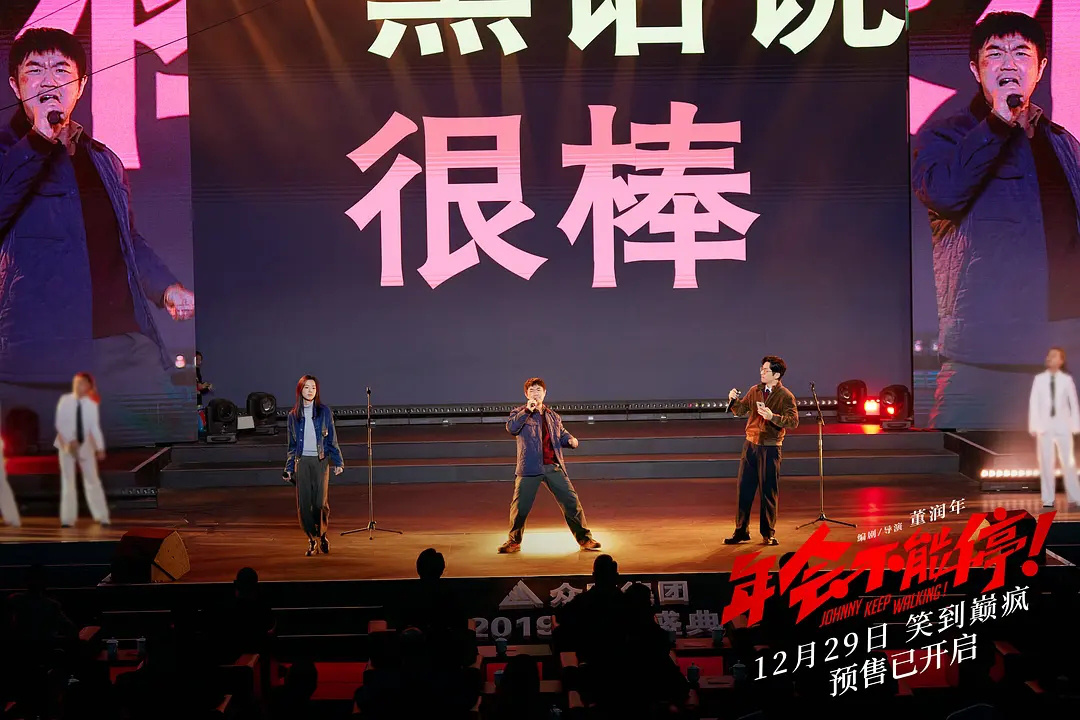
The annual meeting can’t stop! "Word of mouth box office double harvest" Bright Star "has poor stamina
The New Year’s Eve not only gave the mainland film market a good start in 2024, but also proved once again that good movies can always win audiences by word of mouth. After the fermentation of the previous release, the annual meeting can’t stop! "Successfully aligned the" granularity "with the majority of fans in the next week.

Because it is suitable for the characterization of migrant workers, relatively close to the workplace and not low-level jokes, and the "cool text" ending suitable for the New Year, the annual meeting can’t stop! The score of Douban platform has risen twice, and the fermentation of word of mouth is directly reflected in the box office, film arrangement and other data: compared with the previous week, the annual meeting can’t stop! The box office has successfully achieved a sharp decline, and the proportion of films has also increased from single digits to more than 20%. The weekly box office exceeded 310 million, and the cumulative box office has exceeded 550 million, and the forecast model data has reached 1.2 billion.

The Golden Finger also achieved the breakthrough of counterattack in the next week. As another "cool film" at the end of the year, the film recorded another 169 million in the first week of the new year, and the cumulative box office has reached more than 300 million, ranking second in the weekly list.
In contrast, the "New Year’s Eve" hit "Twinkle, Twinkle, Twinkle, Bright Stars" showed a slight lack of stamina after the ritual sense ebbed. In the past week, the film still had 100 million box office receipts, but all the data have a low tide trend. However, with the strong accumulation during the holiday, the box office of the film has reached 650 million. The old film "Three Battalions" still performed steadily despite the impact of a series of new films. At present, it is still among the top five in the weekly list, and the box office has successfully exceeded 600 million.

Week 2: Restore the Beauty of Plateau Jason Statham Tough Guy Anti-fraud
Although the popular schedule has just passed, there are also many good films coming in the new week. The film "Back to Tibet", which won the Golden Rooster Award of the 36th China Film, will truly restore the local customs and national culture of Tibet on the big screen. The starring actor will bring you a Hollywood version of the story of countering the fraud. I wonder if it can be better than "Put all your eggs in one basket" with the blessing of the tough guy.